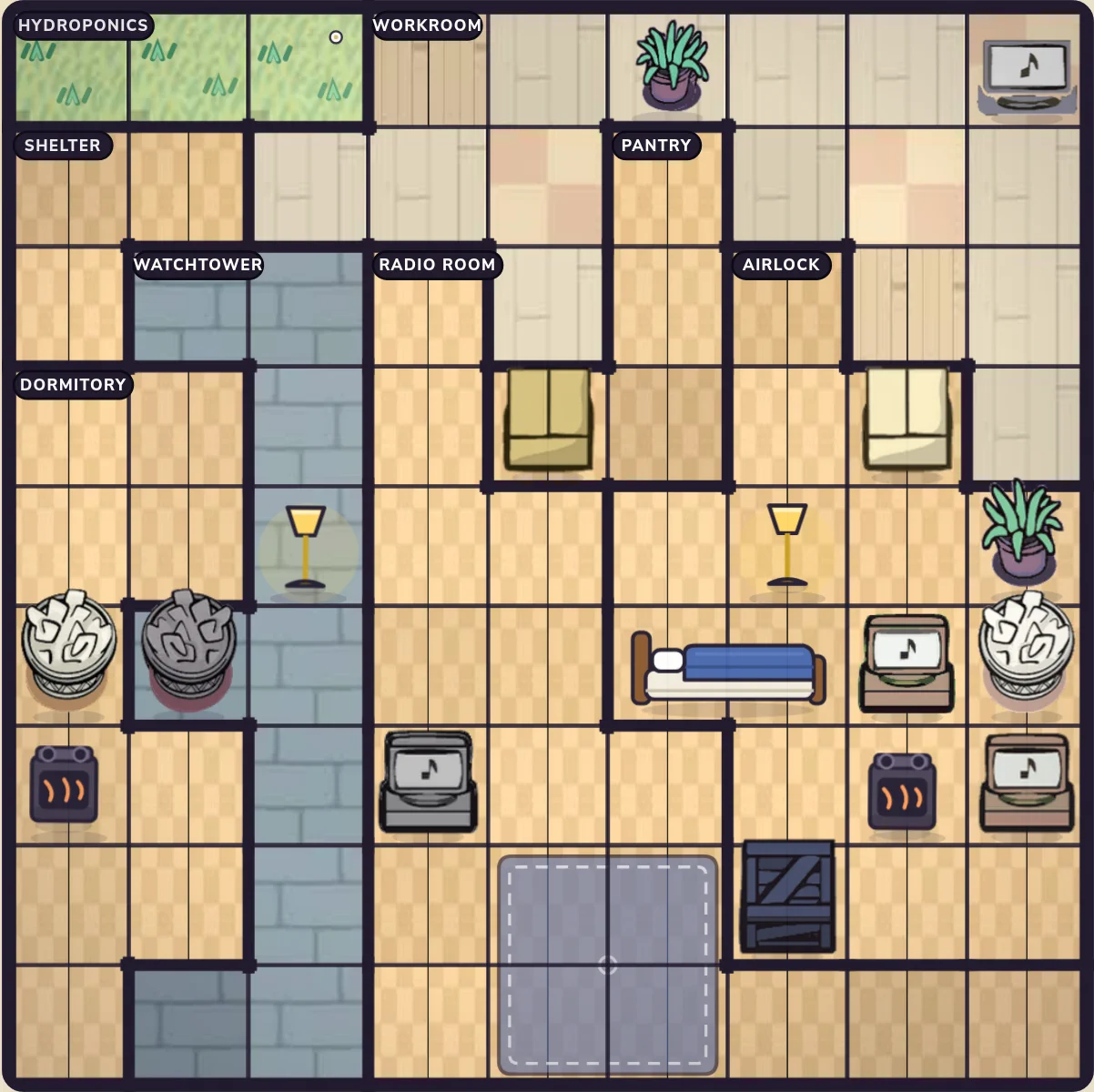
Every difficulty below expert gives you somewhere to stand. Somebody says which room they were in, somebody else names a wall, and the board starts filling from those anchors outward. Expert takes the anchors away.
An expert case is built out of relational testimony: "I was north of the Curator", "the Colonel and I were in the same room", "I was three rows above the Doctor". None of it says where anyone is. All of it says how people sit relative to each other, and the whole cast can slide across the board together until one statement finally nails it down.
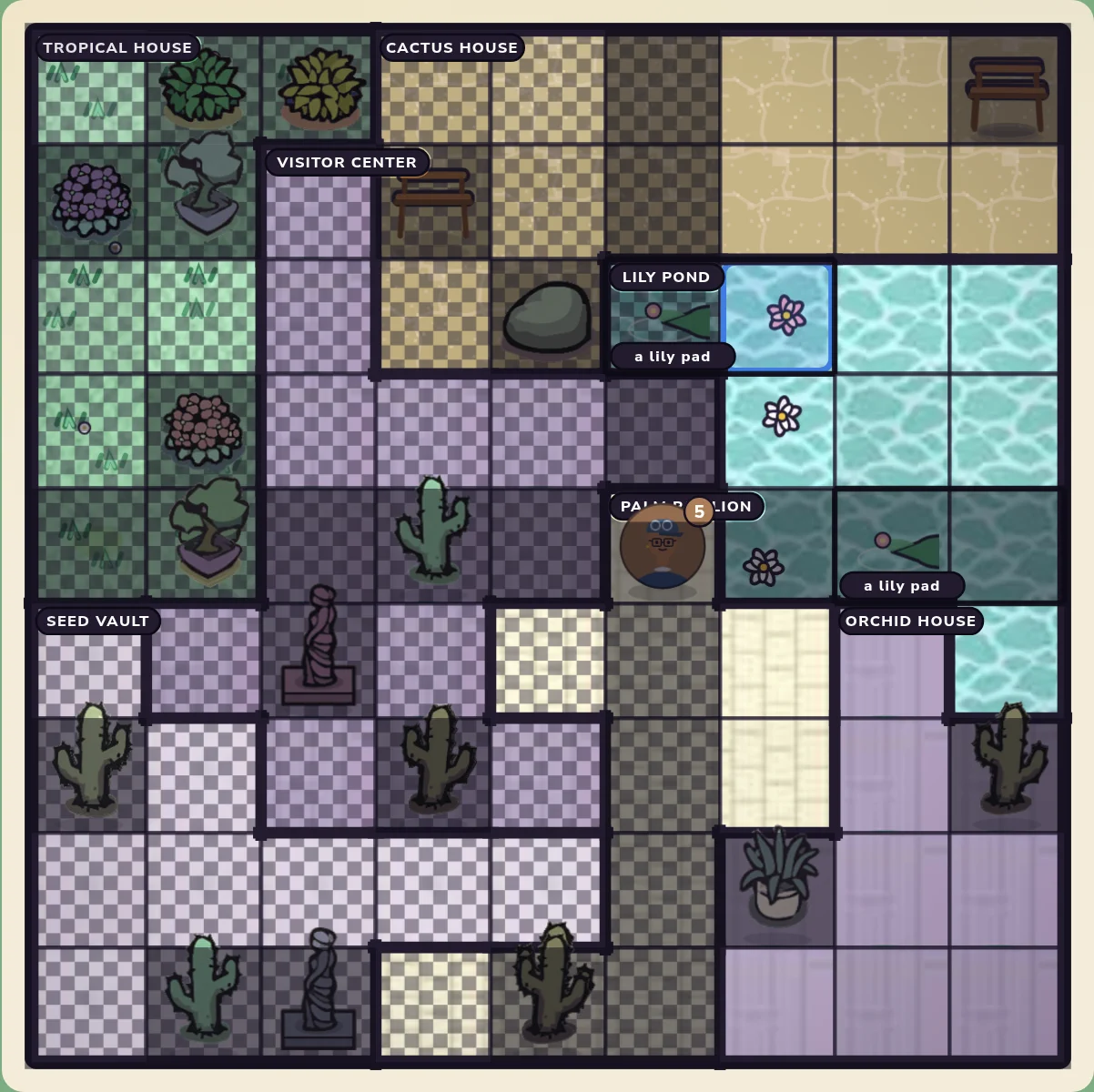
So the technique inverts. Instead of placing the anchored suspects and working outward, you build the chain first — who is north of whom, who must share a room — and then look for the one testimony, often a boring one about a column or a piece of furniture, that fixes the chain in place. Edge placements exist for exactly this middle stage: claim the line you are confident about, let the board shade what that would rule out, and see whether the chain survives.
At lower difficulties the accomplice's lies are about places, and a lie about a place is easy to invert: not the library means anywhere else. A relational lie is not so tidy.
"I was north of the Curator", spoken by the liar, means they were not north of the Curator — which still allows every square level with or south of the Curator, in any column. The statement is false as a whole, and that is much weaker than assuming each part of it is false separately. Statements with two parts are where this bites hardest: "I was alone with the Colonel" is false if they were not alone, or if the person they were with was not the Colonel, or both. Ruling out only the first reading is the most common way to lose an expert case you had otherwise solved.
Expert boards are generated and then machine-verified the same way every other board is: one solution, reachable without guessing. Harder testimony does not mean a looser puzzle — it means the forced step is further from where you are standing.