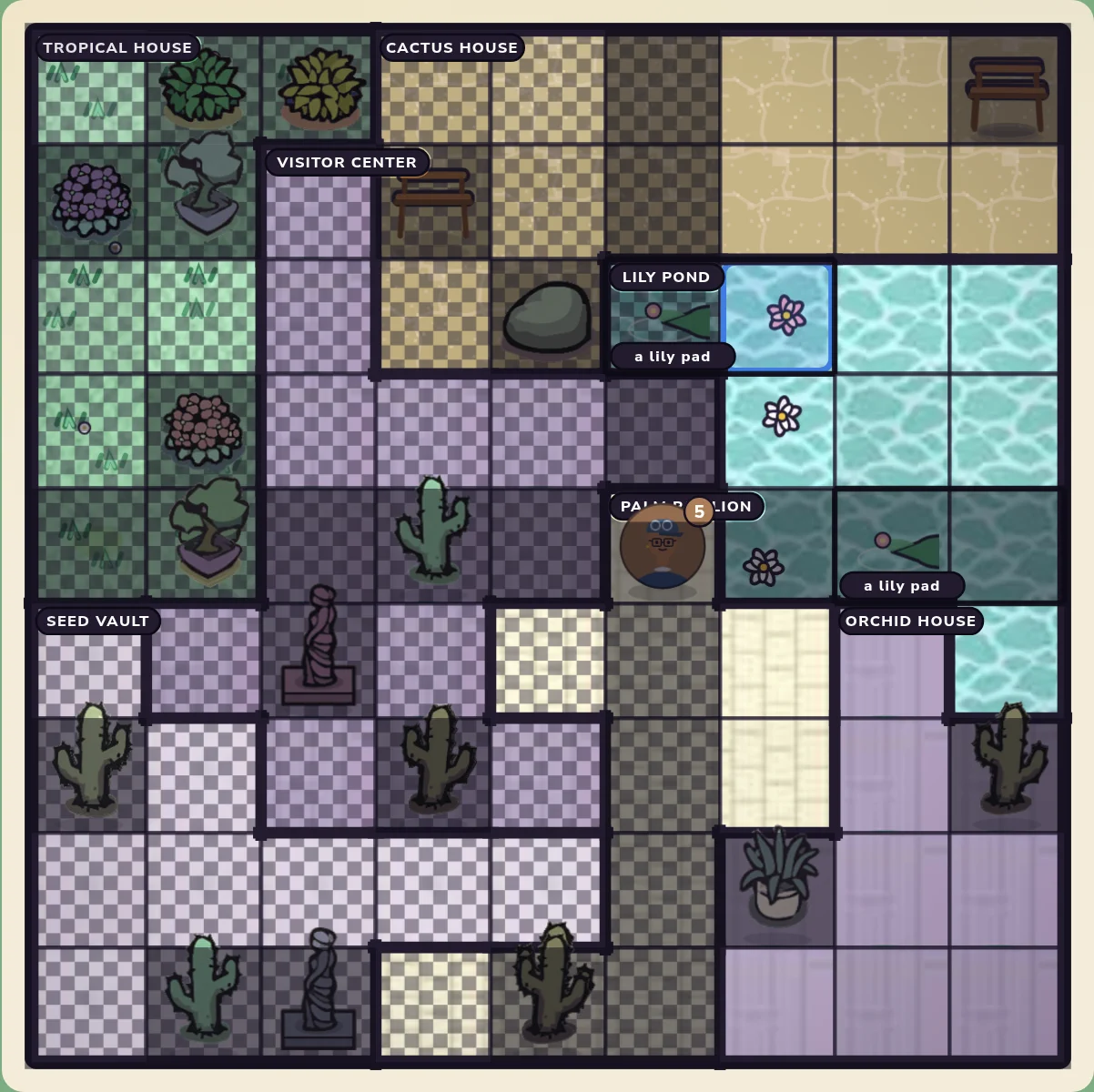
Most of a case is spent knowing roughly where somebody is. You have worked out that the Colonel is somewhere in the third column but not which square, and there is nowhere to write that down. Edge placements are that missing note, and once the board can hold it, everything that depends on the Colonel starts answering.
Select a suspect, then tap just outside the board, immediately beyond the row or column you mean. A shadowed miniature of that suspect stands on the edge and claims the whole line.
It behaves like any other placement — the same press, the same sound, the same undo — with one difference: it is a floating guess, not an answer. Nothing is committed, no mistake is counted, and the suspect is still free. Give that same suspect a real square later and the miniature on the edge is taken away, because you no longer need it: you know exactly where they are.
Because relational testimony can use it. "Pedro was north of Maria" is unusable while Maria is nowhere — but the moment Maria claims the fourth row, everything south of that row becomes impossible for Pedro, and the board says so. A claim you are not sure of still narrows the case, and if it turns out wrong you take it back and the shading goes with it.
Squares are shaded for three different reasons, and they are told apart by pattern, not by how dark they are — darkness would only say "more", and these are not degrees of the same thing.
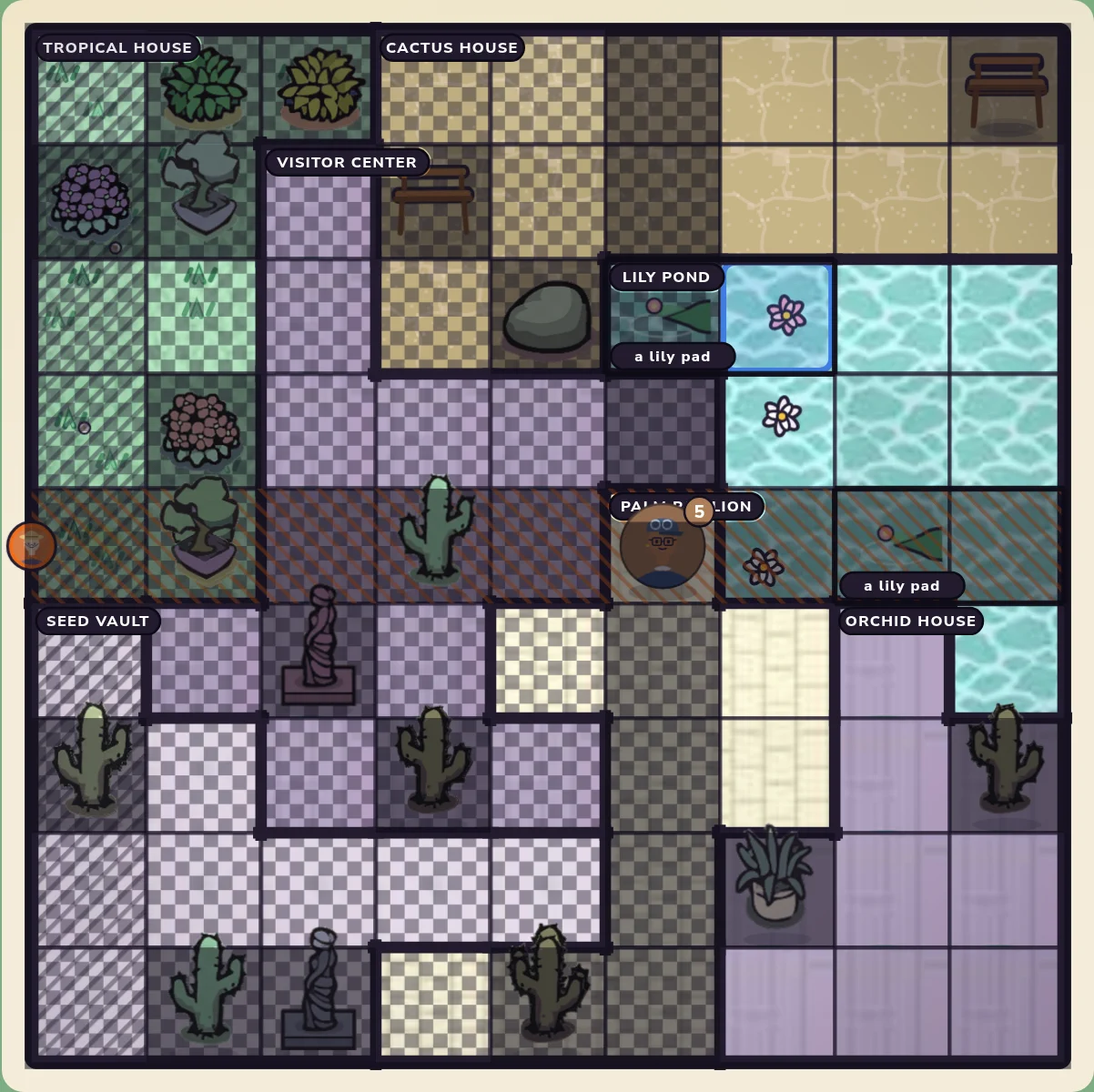
A square can be shaded for more than one reason at once, and when it is, it shows all of them — the patterns lie on top of each other and the square comes out denser. That is information: a square ruled out twice is worth less of your attention than one ruled out once.
The claim itself is drawn differently again — a diagonal hatch in the claimant's own colour, leaning the opposite way, running down the line they claimed. Their colour, so it never reads as the neutral dark of "ruled out"; two hatches, two meanings.
Only the rules block a placement. Shading is the game showing you what your own claims imply, and you can place a suspect on a shaded square whenever you like — the case will simply be wrong, and finding out is the game. That is why the veil and the testimony shadings look different in kind rather than in strength.