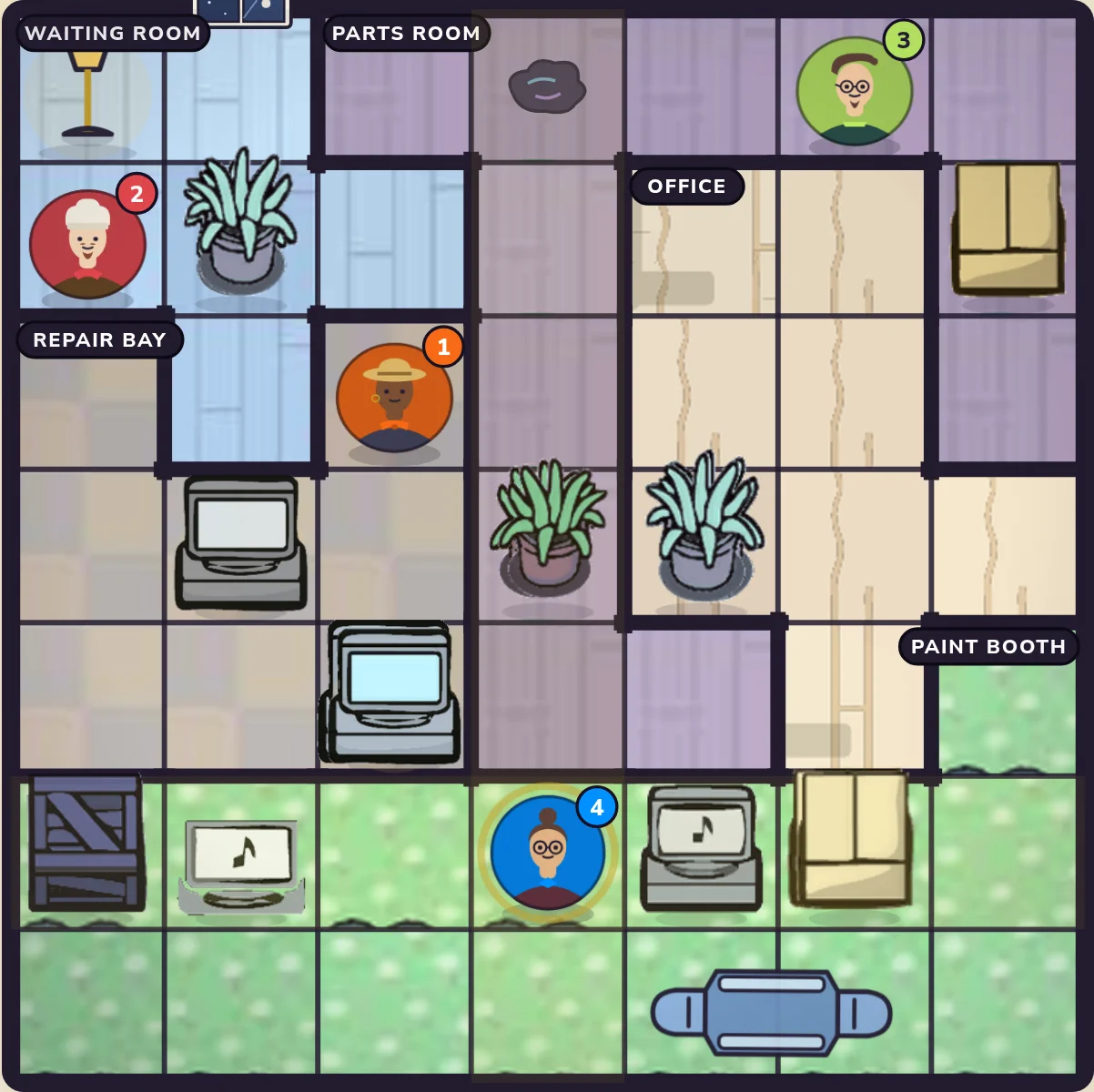
Kludoku cases never require guessing — but they do reward order. Experts don't read clues harder; they read them in the right sequence. This is the ladder.
Statements differ enormously in strength. Rank them as you read: furniture claims ("I sat in the armchair") pin one square. Room claims pin a handful. Row/column claims pin a line. Beside claims ("I was right beside the Colonel") pin nothing until their anchor is placed. Work strongest-first, always.
Every placement consumes a full row and a full column — X-mark them immediately, for everyone. The discipline matters because Kludoku's difficulty curve is really an elimination curve: boards collapse suddenly once enough squares are struck. Pencil notes carry your candidates; in-game, tapping a testimony spotlights the squares it talks about, and assist modes can gray illegal squares while you're learning.
Two loose claims from one suspect multiply into a strong one: a column claim and a row claim meet in one square; a room claim and a row claim often do too. When a suspect has two statements, check their intersection before anything else — it's the most common source of the next placement.
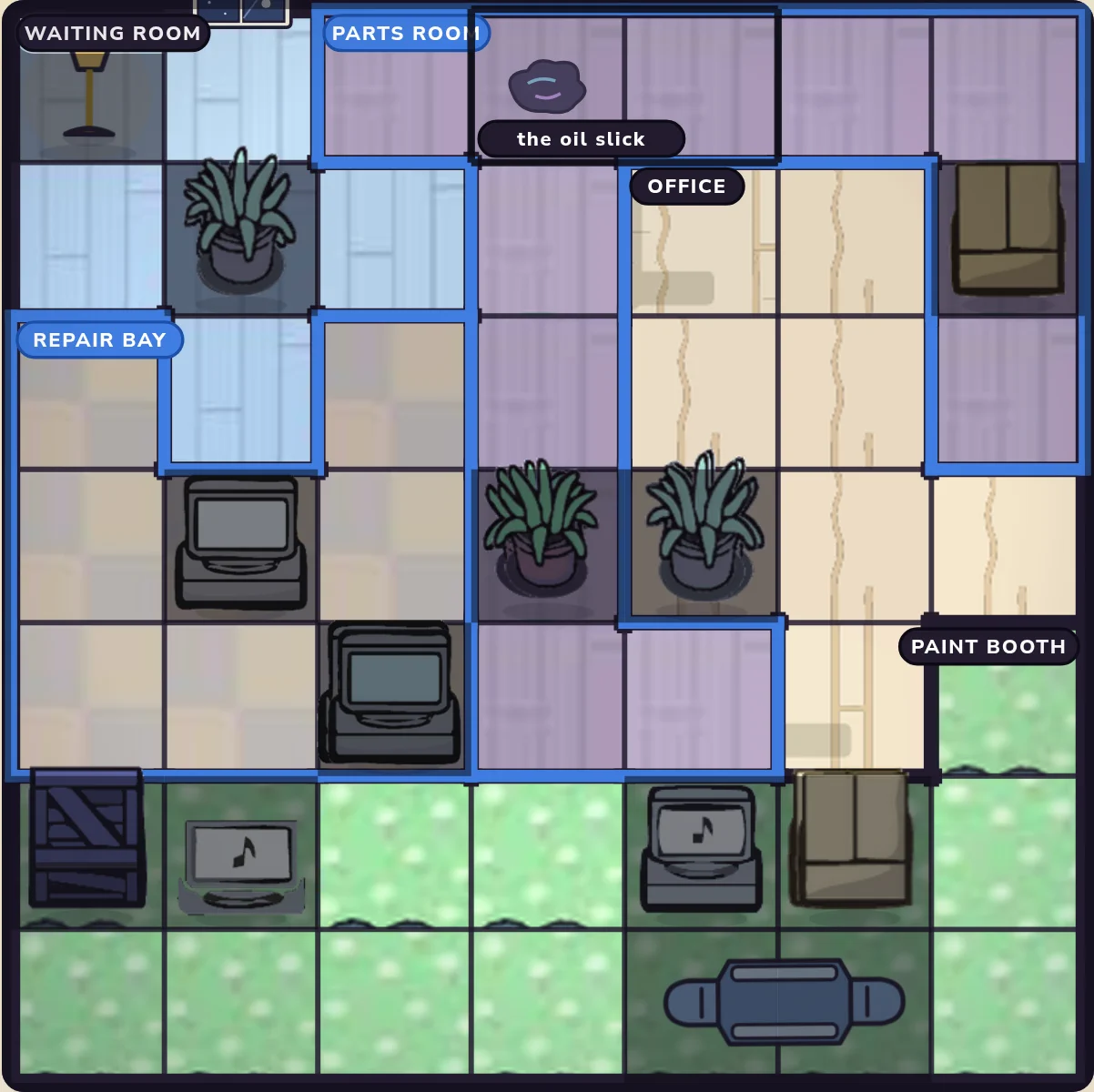
Rooms shrink as the board fills. A room clue that allowed four squares allows two after the next placement and one after that. Revisit every unplaced room-witness after each placement — the squeeze is where mid-game progress hides.
"Beside" means directly up, down, left or right — and in the same room. These clues activate late: once the anchor person is placed, the beside-witness drops to at most four squares, usually fewer after row/column strikes. A chain of beside-claims (A beside B, B beside C) resolves like dominoes once any link is fixed. Save them for last; they'll be waiting for you.
The endgame check: each suspect needs a square, each row and column needs a person. If a row has one free square, someone must take it — find who legally can. If a suspect has one legal square left, place them. Alternate those two scans and endgames finish themselves.
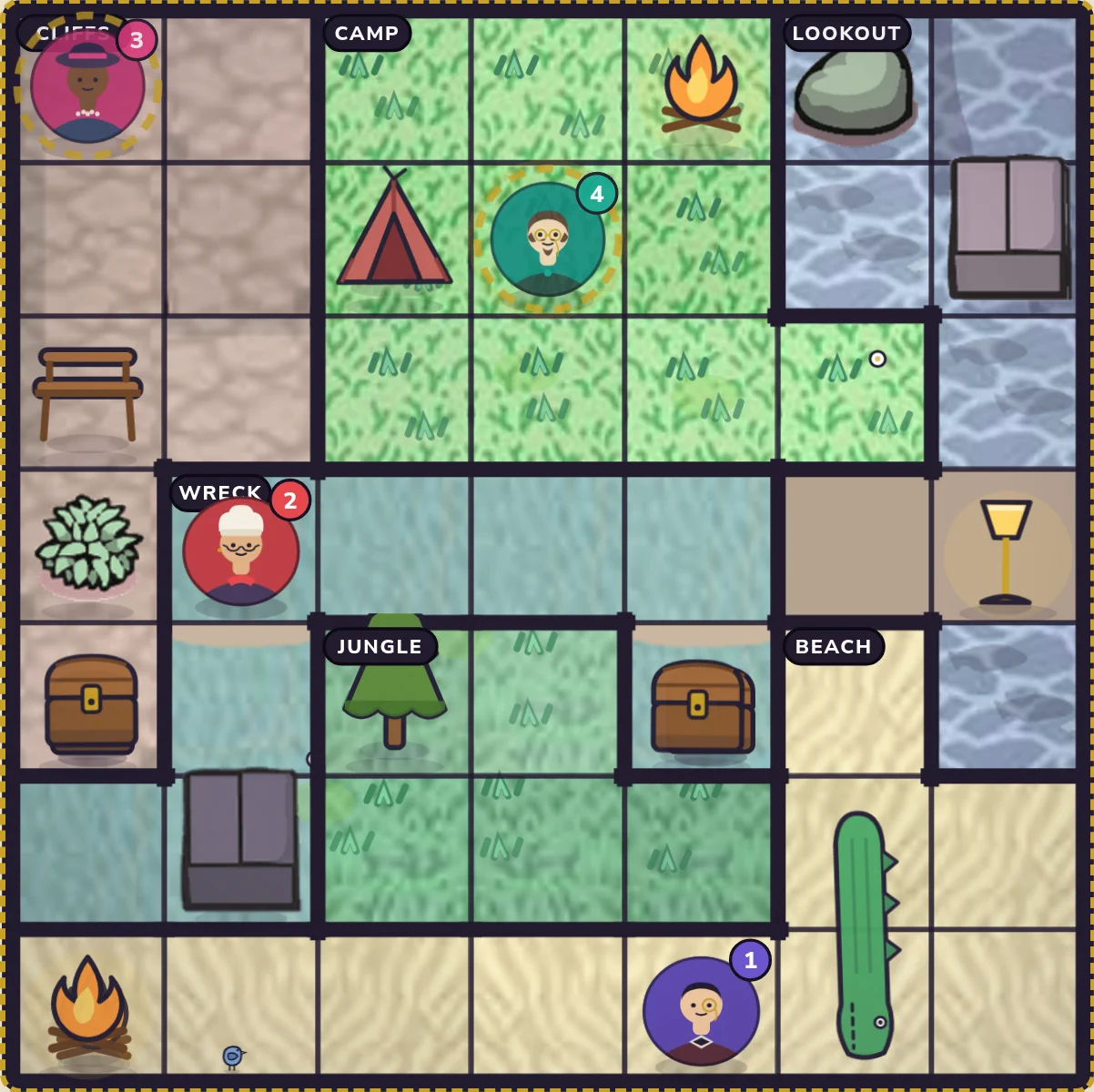
When you're genuinely split between two squares, don't erase your board to test one — place the suspect on the first, then right-click their face (hold on touch) and place them on the second. That opens a guess: two options, one per square, each keeping whatever you place under it. Work option 2 out to the end; if it collapses, drop it and the game strikes the disproven candidate for you, and option 1 is still there with everything you built under it. Nest as deep as the case needs — a guess inside a guess is just another fork, and the mini portraits on the board always show the other side of every fork on your current line, numbered by how far back you made it. Guesses are also how experts test accomplice candidates — one assumption per option, side by side. Full liar technique in the accomplice guide.
Practice the ladder on today's free cases, or read the worked beginner walkthrough first.